 By Saksham Arora
 Morning in Parsakhera begins with the movement of food-processing trucks, paper consignments and workers entering factory compounds. Machines start inside production sheds, packaged consumer goods are prepared for dispatch, and commercial vehicles move towards Bareilly, Moradabad, Delhi and Lucknow.
Parsakhera Industrial Area, also written as Parsa Khera, is an established manufacturing estate on the western side of Bareilly, Uttar Pradesh. Developed in 1980 by the former Uttar Pradesh State Industrial Development Corporation, now UPSIDA, it is one of Bareilly’s principal organised industrial locations.
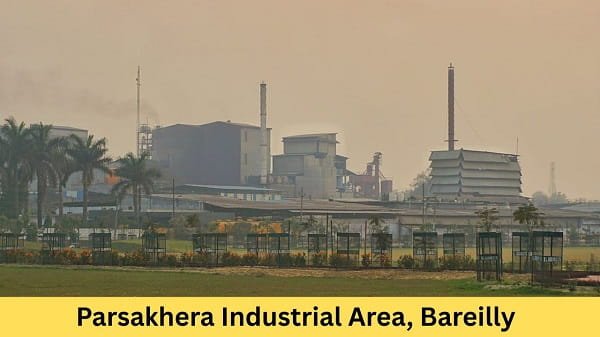
Parsakhera Industrial Area Overview
| Particular | Details |
| Location | Parsakhera, Bareilly, Uttar Pradesh |
| Alternative spelling | Parsa Khera |
| Common PIN code | 243502 |
| Industrial authority | UPSIDA |
| Development period | Industrial estate established in 1980 |
| Main road links | Delhi–Bareilly corridor, NH-30 and NH-530 connections |
| Nearest railway station | Parsa Khera Railway Station |
| Major railway station | Bareilly Junction |
| Nearest airport | Bareilly Airport |
| Nearby areas | C.B. Ganj, Jhumka Tiraha, Dhantiya and Bareilly city |
| Major industries | Food processing, edible oils, paper, chemicals and packaging |
| Suitable for | Factories, warehouses, MSMEs and distribution units |
Where Is Parsakhera Industrial Area Located?
Parsakhera Industrial Area is located towards the western outskirts of Bareilly, near C.B. Ganj and the Delhi-facing side of the city. The locality is recognised through industrial roads, factory plots and the nearby Parsa Khera railway station.
The well-known Jhumka installation at Dhantiya Tiraha is also located around the Parsakhera side of Bareilly and serves as a useful regional landmark. Factory addresses usually include the road number, plot number and industrial-area name.
The estate should not be confused with the older C.B. Ganj Industrial Estate. C.B. Ganj was developed earlier, while Parsakhera became a separate planned industrial estate in 1980.
Connectivity
1. Road Connectivity
Parsakhera benefits from Bareilly’s position on major routes connecting Delhi, Moradabad, Rampur, Lucknow and other cities of Uttar Pradesh. Bareilly lies on NH-30, while NH-530 connects the city with Rampur and the Delhi-facing road network.
The industrial area can be approached through the C.B. Ganj and Jhumka Tiraha side. These routes are useful for trucks carrying agricultural products, packaged foods, paper, chemicals and industrial materials.
Large vehicles should use authorised highway entries and inspect the final approach to the factory. Internal road width, roadside parking and unloading space may differ between plots.
2. Railway Connectivity
Parsa Khera Railway Station is located beside the industrial locality on the Lucknow–Moradabad railway line. It is an electrified Northern Railway station with two platforms, but only a limited number of passenger trains stop there.
Bareilly Junction is the main railway station for long-distance travel. It provides connections towards Delhi, Lucknow, Moradabad, Kolkata, Punjab, Uttarakhand and several other regions. It is approximately 13 km from Parsa Khera station.
Employees and visitors normally complete the remaining journey by auto, taxi, bus or company-operated transport.
3. Bus and Local Transport
Local buses, shared autos, e-rickshaws and private vehicles connect Parsakhera with C.B. Ganj, Qila, central Bareilly and neighbouring settlements.
Public transport is easier to find on the main road than inside individual industrial lanes. Companies running late-night or early-morning shifts may need to provide employee transport.
4. Airport Connectivity
Bareilly Airport at Izzatnagar is the nearest operational passenger airport. It functions as a civil enclave at the Indian Air Force’s Trishul Air Base and is operated by the Airports Authority of India.
Industrial consignments are normally moved by road or rail, while the airport is mainly useful for business visitors and company executives.
Facilities in Parsakhera Industrial Area
1. Industrial Plots and Factory Buildings
The estate contains independent factory plots, production sheds, warehouses and administrative buildings. Property sizes range from smaller MSME units to larger food-processing and industrial campuses.
Some factories occupy multiple adjoining plots. For example, B.L. Agro’s registered office is located at B-31, Road No. 2, Parsakhera Industrial Area.
2. Power and Water
Industrial electricity and water connections are available, but sanctioned capacity differs from one plot to another. Food-processing plants, paper units, chemical businesses and heavy machinery workshops may have very different utility requirements.
Before leasing a unit, businesses should check the sanctioned electrical load, transformer condition, water source, storage capacity and backup-power arrangements.
3. Warehousing and Loading Facilities
Many properties provide yards or loading areas for trucks and delivery vehicles. The estate is suitable for food stocks, packaging material, machinery parts and regional distribution.
However, warehouse-floor height, fire access, drainage and truck-turning space must be inspected individually. Older industrial buildings may require structural or fire-safety upgrades.
4. Environmental and Safety Requirements
Food, paper, chemical and oil-processing companies must maintain suitable wastewater, emissions and waste-management systems.
Factories storing edible oil, chemicals, paper rolls, plastic packaging or combustible materials should maintain fire exits, extinguishers, safe electrical wiring and clear access for emergency vehicles.
5. Daily-Use Facilities
Fuel stations, restaurants, repair shops, banks and basic markets are available around Parsakhera, C.B. Ganj and the highway corridor.
Larger hospitals, hotels, wholesale markets and professional services are available inside Bareilly city.
Major Industries in Parsakhera
Parsakhera has a mixed manufacturing profile, with major activities including:
- Edible oils and packaged foods
- Flour, pulses, spices and staple products
- Paper and paper-related products
- Chemicals and industrial materials
- Camphor and household products
- Plastic and industrial packaging
- Warehousing and regional distribution
- Engineering and maintenance services
Its location in an agricultural region supports food-processing businesses that depend on grains, oilseeds and other farm products.
Company List in Parsakhera Industrial Area
| Company or Business | Main Activity |
| B.L. Agro Industries Limited | Edible oils and packaged foods |
| Saraswati Camphor Factory | Camphor and related products |
| Food-processing units | Flour, pulses, spices and agricultural products |
| Paper-product companies | Paper manufacturing and conversion |
| Packaging manufacturers | Cartons, containers and packing material |
| Chemical-product units | Industrial and household chemicals |
| Warehouse operators | Storage and regional distribution |
| Engineering workshops | Machinery repair and fabrication |
B.L. Agro is the most clearly documented major company in Parsakhera. Its official address confirms its presence on Road No. 2, while its businesses include edible oils and packaged staple-food products.
Saraswati Camphor Factory has also been publicly associated with the Parsakhera industrial centre. Company occupancy and operating status should still be verified before visiting.
Why Businesses Choose Parsakhera
Parsakhera combines planned industrial land with access to Bareilly’s workforce, railway system and regional road network. Its location supports distribution towards western and central Uttar Pradesh as well as Uttarakhand.
The presence of established food and consumer-product businesses creates opportunities for packaging companies, warehouses, transporters and machinery-service providers. Compared with inner-city workshops, Parsakhera also offers more suitable space for factory compounds and commercial vehicles.
Frequently Asked Questions
Q1. Are Parsakhera and Parsa Khera the same industrial area?
A: Yes. Both spellings are widely used. Businesses should follow the spelling mentioned in the official allotment, GST and postal documents.
Q2. Can an industrial plot be purchased directly from an existing owner?
A: Transfer may be possible, but UPSIDA approval, lease conditions, outstanding dues and permitted industrial use must be checked before registration.
Q3. Is Parsa Khera Railway Station suitable for transporting industrial goods?
A: It is mainly a small passenger station with limited train stoppages. Companies should not assume that regular freight loading is available without confirmation from the railway authorities.
Q4. What should a food-processing company inspect before taking a factory?
A: It should check food-grade water, drainage, pest control, washable production surfaces, storage conditions, fire safety and whether the building can obtain the required food and pollution permissions.
Q5. Can a paper or chemical factory operate in any vacant shed?
A: No. The proposed activity must match the plot’s permitted use and pollution category. Power capacity, fire clearance, waste treatment and environmental consent may also be required.