 By Saksham Arora
 As Ghaziabad begins its working day, its smaller industrial pockets quickly fill with delivery vans, factory workers and goods vehicles. Workshops start cutting metal, packaging units prepare consignments, and traders send electrical parts, plastic goods and machinery components towards Delhi, Noida and other NCR markets.
MG Road Industrial Area is a locally recognised manufacturing cluster in Ghaziabad, Uttar Pradesh. It is not as clearly demarcated online as larger planned estates such as Sahibabad Industrial Area or Tronica City. Industry reports identify MG Road among Ghaziabad’s industrial clusters alongside Udyog Kunj, Loni Road, Modinagar and South Side GT Road. Therefore, the exact plot, road, PIN code and approving authority should always be confirmed before visiting or selecting a property.
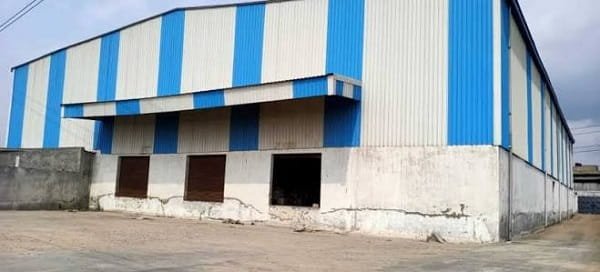
MG Road Industrial Area Overview
| Particular | Details |
| Location | Ghaziabad, Uttar Pradesh |
| Industrial identity | Smaller locally recognised manufacturing cluster |
| Property authority | May vary between UPSIDA, GDA, municipal and privately held industrial properties |
| Regional road links | GT Road, NH 9 and Delhi–Meerut Expressway through connecting city roads |
| Metro connectivity | Delhi Metro Red Line; nearest station depends on the exact unit |
| Railway options | Ghaziabad Junction and Sahibabad Junction, depending on location |
| Nearby industrial clusters | Sahibabad, South Side GT Road, Udyog Kunj and Loni Road |
| Common activities | Engineering, plastics, electrical goods, packaging, metalwork and storage |
| Best suited for | MSMEs, workshops, ancillary manufacturing and NCR distribution |
Ghaziabad is one of Uttar Pradesh’s largest industrial centres. Recent reporting places more than 27,000 industrial units across ten clusters in the district, employing over five lakh workers.
Where Is MG Road Industrial Area Located?
MG Road Industrial Area is located within the wider Ghaziabad manufacturing region. Unlike a gated industrial township, it is better understood as a collection of factories, workshops and storage properties operating around a locally identified road corridor.
The exact location must be checked carefully because “MG Road” is used in several Indian cities. This industrial cluster should not be confused with the well-known MG Road commercial and metro corridor in Gurugram.
An address mentioning only “MG Road Industrial Area, Ghaziabad” may not be sufficient for a first-time visitor or delivery driver. The company name, building or plot number, nearby landmark, locality and correct PIN code should also be obtained.
Property documents are equally important. Some premises may belong to an officially developed industrial layout, while others may stand on separately converted or privately owned land.
Connectivity
1. Metro Connectivity
The Delhi Metro Red Line serves several industrial and residential areas of Ghaziabad. The most practical station depends on the exact position of the factory and its road approach.
Stations such as Shaheed Nagar and Raj Bagh directly serve the Sahibabad Industrial Area side of Ghaziabad. Shaheed Nagar Metro Station is located on GT Road within Sahibabad Industrial Area, while Raj Bagh is also positioned in the same wider industrial belt.
Factories located farther inside Ghaziabad may be better approached through other Red Line stations, followed by an auto-rickshaw, e-rickshaw, bus or company vehicle. Employees should confirm the correct station with the employer instead of selecting one only from the general locality name.
2. Road Connectivity
Ghaziabad benefits from a large regional road network linking it with East Delhi, Noida, Greater Noida, Meerut and other NCR markets. GT Road is useful for movement towards Shahdara, Sahibabad and central Ghaziabad, while NH 9 and the Delhi–Meerut Expressway support access towards Delhi, Vijay Nagar, Dasna and Meerut.
The most suitable road depends on where the MG Road unit is located. Businesses should test the complete route rather than measuring only the straight-line distance from a highway.
Congestion is common at major Ghaziabad junctions. Internal industrial roads may also have parked commercial vehicles, informal loading activity and limited turning space. Road damage, encroachment and drainage problems have affected several older Ghaziabad industrial belts after monsoon periods.
3. Railway and Local Transport
Ghaziabad Junction is the city’s principal railway station and provides suburban, regional and long-distance services. Sahibabad Junction may be more convenient for units located towards the Delhi border and Sahibabad side.
City buses, autos, e-rickshaws and app-based cabs operate across Ghaziabad. Public transport is generally easier to find on main roads than inside smaller industrial lanes.
Companies operating night shifts may need dedicated employee transport, particularly where workers travel from Delhi, Noida or distant residential colonies.
Facilities in MG Road Industrial Area
1. Factory and Workshop Space
The cluster mainly contains small and medium factory buildings, workshops, storage premises and office-cum-production units. It is generally more suitable for urban manufacturing than for very large factories requiring extensive campuses.
Common business activities include:
- Plastic moulding and plastic components
- Electrical goods and control equipment
- Metal fabrication and machining
- Automobile and machinery components
- Printing and packaging
- Furniture and interior products
- Equipment maintenance and repair
- Compact storage and NCR distribution
Property quality may differ considerably. Some buildings offer ground-floor manufacturing space and private loading areas, while others operate from older multi-storey structures with restricted vehicle access.
2. Business Support Services
Ghaziabad’s large industrial economy provides access to transporters, machine-repair workshops, welders, electricians, fabricators, labour contractors and raw-material suppliers.
Banks, fuel stations, restaurants, pharmacies and daily-use markets are available across nearby residential and commercial neighbourhoods. Larger hospitals, hotels and organised business services are available in central Ghaziabad, Indirapuram, Kaushambi and Sahibabad.
3. Power and Working Infrastructure
Electricity capacity should be checked for the individual premises. Industrial businesses in several Ghaziabad clusters reported interruptions, voltage fluctuations and ageing power infrastructure during 2025, particularly after storms and extreme weather.
A tenant should verify the sanctioned load, transformer connection, wiring condition and backup arrangement before installing machinery. Power-sensitive operations such as moulding, printing or automated production may suffer substantial losses during voltage instability.
Water supply, drainage, road condition, fire access and waste collection should also be inspected. The presence of operating factories nearby does not prove that every unit has the same infrastructure capacity.
Company and Business Profile in MG Road Industrial Area
A dependable, continuously updated public directory of MG Road Industrial Area companies is not available. Since small factory tenants can change, a business-category profile is more reliable than publishing uncertain company names.
| Business Category | Typical Operations |
| Engineering workshops | Fabrication, machining and machinery parts |
| Plastic-product units | Moulded components, containers and industrial goods |
| Electrical businesses | Panels, wiring products and control equipment |
| Packaging companies | Cartons, labels, pouches and packing materials |
| Auto-component units | Fittings, accessories and replacement parts |
| Printing businesses | Commercial printing and product labels |
| Storage operators | Compact warehousing and local distribution |
Visitors should confirm the current company name, contact person and exact address before travelling. Businesses may operate from leased floors or shared factory compounds where name boards change over time.
Why Businesses Choose MG Road Industrial Area
The cluster’s main advantage is its position within Ghaziabad and the larger Delhi-NCR market. Businesses can supply Delhi, Noida, Sahibabad and other nearby commercial centres without operating from a distant industrial township.
The availability of workers, repair services, transporters and small suppliers supports MSMEs involved in engineering, packaging, electrical products and ancillary manufacturing.
Its limitations include unclear locality boundaries, varying property approvals, parking pressure and uneven infrastructure between buildings. The exact premises matter more than the general industrial-area name.
Frequently Asked Questions
Q1. Why should visitors confirm the full address before travelling?
A: MG Road Industrial Area is not presented as one clearly bounded gated estate. The complete address should include the company name, plot or building number, nearby landmark, locality, PIN code and contact number.
Q2. Can employees commute daily from Delhi or Noida?
A: Yes, depending on the factory location. Metro, bus and road connections are available across Ghaziabad, but the last-mile journey may require an auto, e-rickshaw or company vehicle.
Q3. Is MG Road suitable for regular delivery across Delhi-NCR?
A: It can be suitable for small and medium consignments because Ghaziabad is connected with Delhi, Noida and Meerut. Businesses should first test peak-hour travel time and commercial-vehicle access.
Q4. Is every property advertised here approved for industrial use?
A: Not necessarily. Buyers and tenants should verify land use, ownership papers, sanctioned building plans and the authority responsible for the property.
Q5. What should a small manufacturer inspect before renting a unit?
A: The most important checks are machinery access, power load, floor strength, fire exits, loading space, drainage and whether delivery vehicles can turn and wait without blocking the road.