 By Saksham Arora
 Before the main roads of Delhi fill with commuter traffic, Bhorgarh begins its day with the movement of mini-trucks, factory workers and raw-material vehicles. Workshop shutters rise, packaging units start production, and goods are prepared for markets across Delhi, Haryana and the wider NCR.
Bhorgarh Industrial Area is an established manufacturing zone near Narela in North Delhi. It is also referred to as Bhorgarh Phase II or Bawana Phase II in government and public records. The area forms part of Delhi’s northern industrial belt and is managed through the Delhi State Industrial and Infrastructure Development Corporation, commonly known as DSIIDC.
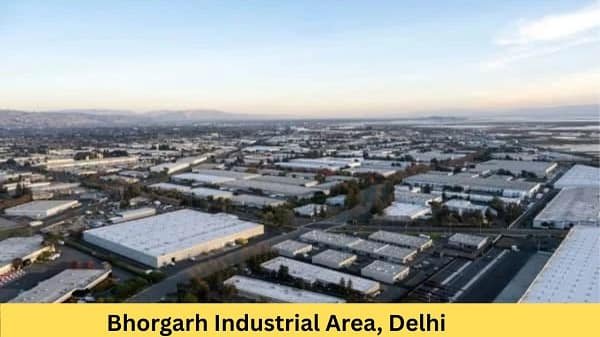
Bhorgarh Industrial Area Overview
| Particular | Details |
| Location | Bhorgarh, Narela, North Delhi |
| Alternative names | Bhorgarh Phase II and Bawana Phase II |
| Common PIN code | 110040 |
| Industrial authority | DSIIDC |
| Area type | Planned industrial and manufacturing estate |
| Main road connection | Narela–Bawana Road and routes towards NH-44 |
| Nearest railway station | Narela Railway Station |
| Current metro access | Samaypur Badli Metro Station, followed by road transport |
| Future metro connection | Approved Rithala–Narela–Kundli corridor with Bhorgarh Village station |
| Nearby areas | Narela, Shahpur Garhi, Bawana, Sanoth and Alipur |
| Major activities | Plastics, packaging, fabrication, engineering and household products |
| Suitable for | MSMEs, workshops, factories and warehouses |
Bhorgarh lies within the wider Narela subdivision close to Delhi’s border with Haryana. The surrounding industrial network includes Narela Industrial Complex, Bawana Industrial Area and smaller manufacturing pockets around Sanoth and Shahpur Garhi.
Where Is Bhorgarh Industrial Area Located?
Bhorgarh Industrial Area is situated near Bhorgarh village on the Narela side of North Delhi. It occupies an important position between the Narela and Bawana industrial belts.
Addresses may mention Bhorgarh Industrial Area, Bhorgarh Phase II, Narela Industrial Area or Bawana Phase II. These names can refer to adjoining sections of the same wider industrial region. Visitors should therefore confirm the exact plot number, block and factory gate before travelling.
The estate should not be confused with Bawana Industrial Area Phase I, which is a separate and much larger industrial development.
Connectivity
1. Road Connectivity
Local industrial roads connect Bhorgarh with Narela, Bawana, Sanoth and Shahpur Garhi. From the Narela side, vehicles can reach NH-44, formerly known as GT Karnal Road, which provides movement towards Delhi, Singhu Border, Sonipat and Panipat.
Road connections towards Bawana provide access to Kanjhawala, Rohini and western Delhi. These routes are useful for factories supplying Delhi’s wholesale markets and neighbouring industrial areas.
Commercial vehicles can enter the estate, but traffic conditions and internal road quality differ by section. Loading space, truck-turning capacity and road level should be inspected for the individual property.
2. Railway Connectivity
Narela Railway Station is the nearest useful passenger railway facility. It lies on the Delhi–Ambala railway corridor and provides local and regional connections.
Employees and visitors generally use autos, buses or private vehicles for the remaining journey. Railway transport is more useful for passenger movement than for routine factory deliveries, which mainly depend on roads.
3. Metro Connectivity
There is currently no operational Delhi Metro station inside Bhorgarh Industrial Area. Samaypur Badli on the Yellow Line remains one of the practical metro options, followed by a road journey towards Narela.
A major improvement is planned through the approved Rithala–Narela–Kundli extension of the Red Line. The corridor includes a proposed Bhorgarh Village Metro Station, but it should not be treated as operational until passenger services officially begin.
4. Bus and Airport Connectivity
DTC and local buses operate through Narela and adjoining areas. Shared autos, e-rickshaws and employer-arranged vehicles are commonly used for the final journey into industrial streets.
Indira Gandhi International Airport is the main airport for business travel. Routine industrial freight generally moves by road because Bhorgarh is far from the airport and better connected with northern NCR markets.
Facilities in Bhorgarh Industrial Area
1. Industrial Plots and Factory Buildings
Bhorgarh contains planned industrial plots, independent factory buildings, workshops and storage premises. Properties range from compact MSME units to multi-floor industrial buildings.
The area suits businesses involved in light and medium manufacturing, assembly, packaging and city-level distribution. Larger units must carefully examine loading space, fire access and power capacity.
2. Power, Water and Internal Infrastructure
Industrial electricity connections and basic utility systems are available, but sanctioned load and water arrangements differ between properties. Businesses using moulding machines, compressors, furnaces or heavy motors should confirm whether the existing connection supports their activity.
In 2025, the Delhi government announced a redevelopment and management plan for Bhorgarh. The proposed improvements included better roads, stormwater drainage, smart lighting and round-the-clock CCTV surveillance.
3. Drainage and Building Safety
Drainage and construction safety require careful attention. A February 2026 factory-site accident in Bhorgarh Phase II involved the collapse of loose soil and a temporary wall structure near a drain. This underlines the importance of approved construction, stable foundations and safe excavation practices.
4. Environmental Compliance
Factories producing emissions, wastewater or hazardous waste may require consent from the Delhi Pollution Control Committee. Plastic processing, painting, metal treatment and chemical-based activities can face additional environmental conditions.
Inspections across the wider Narela and Bawana industrial belt have identified units operating without valid pollution consent or proper hazardous-waste compliance. Every business should verify permissions for its own manufacturing process.
5. Daily-Use Facilities
Tea stalls, small restaurants, repair shops and transport services operate around the industrial area. Banks, hospitals, markets and wider retail facilities are available in Narela.
Satyawadi Raja Harish Chandra Hospital is one of the important healthcare facilities serving the wider Bhorgarh and Narela region.
Major Industries in Bhorgarh
Bhorgarh mainly accommodates small and medium-sized manufacturing businesses. Common industrial activities include:
- Plastic moulding and household plastic products
- Packaging materials and printed labels
- Metal fabrication and engineering work
- Electrical and lighting components
- Furniture and household products
- Machinery repair and maintenance
- Warehousing and local distribution
The estate works closely with the broader Narela–Bawana manufacturing ecosystem, allowing businesses to access suppliers, labour, transporters and repair services within a relatively compact region.
Company and Business List
A complete and regularly updated official tenant directory is not publicly available. The following is therefore a representative list of business categories commonly associated with Bhorgarh:
| Business Type | Main Activity |
| Plastic-product manufacturers | Moulded domestic and industrial items |
| Packaging units | Boxes, labels, films and packing materials |
| Fabrication workshops | Welding, cutting and metal structures |
| Electrical-product units | Components, fittings and small equipment |
| Furniture manufacturers | Metal, plastic and wooden furniture |
| Engineering workshops | Machining, repair and component production |
| Warehouse operators | Storage and distribution |
| Trading firms | Industrial raw materials and machinery supplies |
Customers and job applicants should confirm the company’s current trade name, GST details, plot number and active operating status before visiting.
Why Businesses Choose Bhorgarh
Bhorgarh offers access to Delhi’s large consumer market while remaining close to Haryana’s industrial and logistics corridors. Businesses can reach Narela, Bawana, Kundli, Sonipat and NH-44 without operating from central Delhi.
Its main advantages are industrial plot availability, access to a large workforce and proximity to other manufacturing estates. The planned redevelopment and future metro corridor may further improve the area’s business environment and employee connectivity.
Frequently Asked Questions
Q1. Why is Bhorgarh called Bawana Phase II?
A: Government and public records sometimes describe Bhorgarh Industrial Area as Bawana Phase II because it was developed as an extension of Delhi’s northern industrial network.
Q2. Is Bhorgarh the same as Narela Industrial Area?
A: No. They are adjoining industrial zones, although company addresses and local references may sometimes overlap.
Q3. Does Bhorgarh have an operational metro station?
A: No. A Bhorgarh Village station is planned on the approved Rithala–Narela–Kundli corridor, but it is not operational yet.
Q4. Are all industrial properties freehold?
A: Not necessarily. In 2026, trader groups were still seeking conversion of industrial properties in Bhorgarh and other Delhi estates from leasehold to freehold. The title of each plot must be checked separately.
Q5. Is every plot suitable for plastic or chemical manufacturing?
A: No. The permitted activity depends on land-use conditions, pollution category, power capacity, fire approval and waste-management arrangements.