 By Saksham Arora
 Morning activity in Samaypur Badli begins with workshop shutters opening, workers arriving by metro and delivery vehicles entering lanes lined with factories and storage buildings. Small trucks carry cartons, metal parts, plastic products and finished goods, while larger vehicles move towards nearby transport hubs and the GT Karnal Road corridor.
Samaypur Badli is a genuine industrial belt in North-West Delhi. However, the name needs to be understood correctly. Samaypur Industrial Area and Badli Industrial Area are adjoining manufacturing pockets rather than one single enclosed estate with a common entrance. Business addresses may use Samaypur, Badli Industrial Area, Suraj Park, Badli village or Phase 1 depending on the exact property. Badli is also included among the industrial areas covered by Delhi’s current infrastructure redevelopment programme.
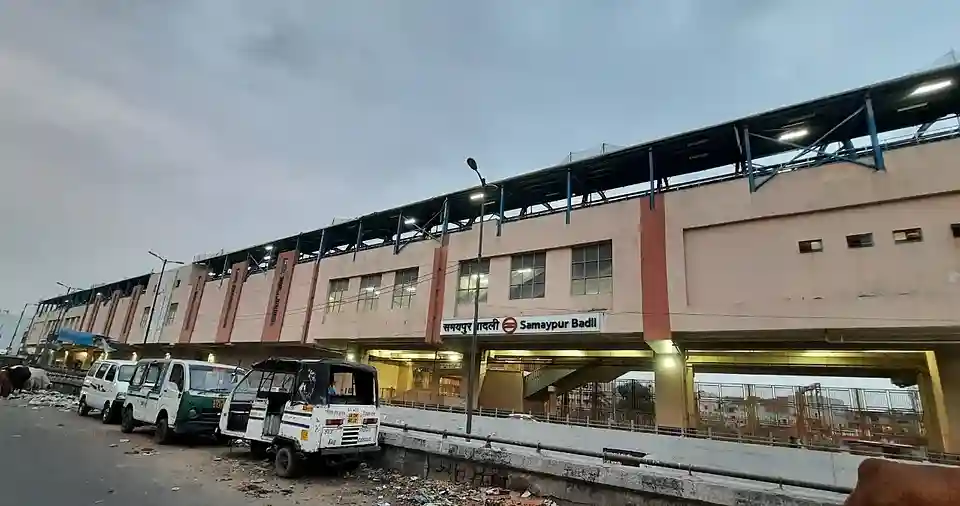
Samaypur Badli Industrial Area Overview
| Particular | Details |
| Location | Samaypur and Badli, North-West Delhi |
| Common postal zone | 110042; nearby addresses may use a different code |
| Area character | Urban manufacturing, workshop and warehouse cluster |
| Main industrial identity | Samaypur Industrial Area and Badli Industrial Area |
| Nearby localities | Rohini Sector 18, Siraspur, Libaspur, Suraj Park and Shahbad |
| Main road links | Shahbad Bawana Road, GT Karnal Road and Outer Ring Road connections |
| Nearest metro station | Samaypur Badli |
| Metro line | Delhi Metro Yellow Line |
| Nearest railway station | Badli Railway Station |
| Major transport centre | Sanjay Gandhi Transport Nagar |
| Common activities | Crockery, packaging, metalwork, plastic goods, repairs and storage |
| Suitable for | Small and medium factories, workshops and city-distribution warehouses |
Samaypur Badli Metro Station is located near Suraj Park and Rohini Sector 18, while Badli Railway Station serves the same wider locality. The surrounding industrial belt also benefits from its proximity to NH-44, commonly called GT Karnal Road in Delhi.
Where Is Samaypur Badli Industrial Area Located?
The industrial belt lies in North-West Delhi around Samaypur village, Badli village, Suraj Park and the roads connecting Rohini with Siraspur, Libaspur and GT Karnal Road. Samaypur Industrial Area lies on one side of the locality, while Badli Industrial Area forms another nearby cluster.
Unlike a modern industrial township divided into clearly marked sectors, the area contains factories, village roads, residential pockets, shops and warehouses within the same wider urban zone. Visitors should therefore obtain the complete address, including the phase, street, plot number, nearby landmark and factory gate.
The name can also cause confusion because Samaypur Badli is used for the metro station, railway-side locality, police-station area and wider neighbourhood. A company described as being “near Samaypur Badli” may not necessarily be inside Badli Industrial Area.
Connectivity
1. Road Connectivity
Shahbad Bawana Road is an important local approach for many Samaypur addresses. Internal Badli roads connect the industrial belt with Rohini, Siraspur and nearby residential sectors. GT Karnal Road or NH-44 provides wider movement towards Azadpur and central Delhi in one direction and Narela, Kundli and Sonipat in the other.
Sanjay Gandhi Transport Nagar is located in the wider Samaypur–Libaspur belt and supports trucking, vehicle servicing, spare parts and freight-related activities. This proximity is useful for businesses that depend on regular goods-vehicle movement.
Road conditions can differ sharply between the main corridors and internal factory lanes. Congestion has also occurred around the Samaypur Badli underpass and Shahbad Bawana Road during maintenance work or periods of heavy traffic.
Before selecting a factory or warehouse, a business should inspect:
- Entry restrictions for commercial vehicles
- Internal-road width
- Factory-gate clearance
- Truck-turning space
- Loading arrangements
- Roadside parking
- Waterlogging after heavy rain
- Access during peak traffic hours
Delhi’s industrial-road redevelopment programme includes Badli among the areas selected for road improvement, with DSIIDC responsible for implementing the wider programme.
2. Metro Connectivity
Samaypur Badli Metro Station is the northern terminal of the Delhi Metro Yellow Line. The line provides direct connectivity towards Jahangirpuri, Azadpur, Delhi University, Kashmere Gate, Connaught Place, Central Secretariat and Gurugram-facing stations.
The station is convenient for workers and visitors travelling from central and northern Delhi. However, the industrial belt is spread across several roads, so the final journey may require an e-rickshaw, auto, bus or company vehicle.
Companies located deeper inside Badli Industrial Area should not describe every property as being within walking distance of the metro. The actual distance and route should be checked from the factory gate.
3. Railway Connectivity
Badli Railway Station is a functioning Northern Railway and Delhi suburban station with the code BHD. It is located close to Samaypur Badli and has two passenger platforms.
The station can be useful for selected passenger services, but it is not a substitute for a dedicated industrial freight terminal. Businesses requiring bulk railway freight should confirm the appropriate goods terminal, loading arrangements and road transfer separately.
New Delhi, Delhi Junction and Delhi Sarai Rohilla are the main long-distance railway options, depending on the passenger’s route and train.
4. Bus and Local Transport
DTC buses, cluster buses, autos, e-rickshaws and taxis operate through Samaypur, Badli, Rohini and the surrounding areas. Public transport is generally easier to find near the metro station, railway station and main roads.
Early-morning and late-night shift workers may face fewer last-mile options inside industrial lanes. Employers operating multiple shifts may need fixed pickup points or organised staff transport.
5. Airport Connectivity
Indira Gandhi International Airport is the nearest major passenger and cargo airport. The journey normally involves Outer Ring Road or other Delhi road corridors and can vary considerably with traffic.
The airport is mainly useful for business visitors, technical staff and urgent high-value consignments. Ordinary manufactured goods are generally transported by road.
Facilities in Samaypur Badli Industrial Area
1. Factories, Workshops and Warehouses
The area contains compact factory buildings, multi-floor industrial premises, workshops, godowns and office-cum-storage properties. It is better suited to small and medium urban manufacturing than to very large plants needing open yards or extensive container parking.
Before taking a property, the buyer or tenant should verify:
- Approved industrial use
- Ownership or lease documents
- Building-plan status
- Property-tax records
- Electricity category and sanctioned load
- Fire-safety arrangements
- Machinery access
- Structural condition
- Outstanding utility or authority dues
Delhi simplified municipal factory-licensing procedures in 2025 by recognising documents such as MSME Udyam Registration or applicable government and DSIIDC allotment documents alongside annual property-tax compliance. The exact approvals required still depend on the business, building and manufacturing process.
2. Electricity and Water
Electricity and municipal services are available across the developed locality, but capacity differs between properties. Older premises may have wiring, meter or transformer limitations.
Factories using welding equipment, moulding machines, compressors, industrial ovens or powered lifts should confirm the sanctioned load before installation. Water supply, storage tanks, drainage and wastewater arrangements should also be examined separately.
3. Loading, Storage and Distribution
Samaypur Badli can support city-oriented warehouses serving Rohini, Azadpur, Narela, North Delhi and neighbouring Haryana markets. Its closeness to transport businesses is helpful for cartons, spare parts, consumer goods and industrial supplies.
Warehouse users should inspect floor strength, roof leakage, ventilation, ceiling height and the space available for loading vehicles. A warehouse with a large floor area may still be unsuitable when its access lane is too narrow.
4. Factory and Worker Safety
Goods lifts, electrical installations and heavy machinery require regular inspection and maintenance. A fatal goods-lift collapse at a crockery factory in Samaypur Badli in January 2026 highlighted the danger of continuing to use equipment after workers report faults or unusual noises.
Factories should maintain:
- Safe goods lifts and machinery
- Clearly marked emergency exits
- Suitable fire extinguishers
- Unblocked staircases
- Ventilation
- Safe wiring
- Protective equipment
- Clear storage aisles
- Emergency contact procedures
5. Pollution and Waste Management
Manufacturing permission depends on the actual process carried out inside the unit. Metal treatment, chemical use, plastic processing, coating, printing and water-polluting work may require additional consent and waste-management arrangements.
DPCC regulates industrial pollution and carries out monitoring and enforcement in Delhi. A factory address inside an industrial area does not automatically permit every manufacturing activity.
Major Industries and Business Activities
Samaypur Badli Industrial Area commonly supports:
- Crockery and household products
- Plastic goods and moulded components
- Metal fabrication
- Electrical products and repairs
- Packaging and cartons
- Printing and labels
- Automobile servicing and parts
- Furniture and woodwork
- Small assembly units
- Warehousing and distribution
- Transport-support businesses
Crockery manufacturing and automobile-related service activity have both been reported within the wider Samaypur Badli locality.
Company and Business Profile
A complete and permanently updated public directory is not available because many units are small, premises change hands and some businesses operate under trading names.
| Company or Business Category | Main Activity |
| Crockery manufacturers | Household and commercial crockery products |
| Packaging businesses | Cartons, labels, wrapping and protective materials |
| Metal workshops | Fabrication, grills, frames and machine parts |
| Plastic-product units | Containers, moulded items and components |
| Electrical businesses | Equipment assembly, repair and industrial supplies |
| Printing units | Labels, commercial printing and packaging material |
| Automobile businesses | Servicing, washing, parts and repairs |
| Warehouse operators | Storage and North Delhi distribution |
| Transport businesses | Freight movement, vehicle repair and logistics support |
Visitors should confirm the legal company name, phase, plot number and operating status before travelling. A directory listing or recruitment advertisement should not be treated as proof that the unit is still operating at the same address.
Why Businesses Choose Samaypur Badli Industrial Area
The area’s main advantage is its location within Delhi. Businesses can access Rohini, Azadpur, Narela, central Delhi and the Delhi–Haryana border markets without operating from a distant industrial township.
The Yellow Line metro, local railway station and nearby transport businesses make it convenient for workers, suppliers and smaller consignments. The area is particularly suitable for urban manufacturing, repair businesses, packaging and city distribution.
Its main limitations are congested internal roads, mixed land uses, limited truck parking and differences in building quality. Every property should therefore be judged by its exact road and approval status rather than by the industrial-area name alone.
Frequently Asked Questions
Q1. How can a visitor tell whether a company is in Samaypur or Badli Industrial Area?
A: Check the complete postal address and map pin. The address should mention the phase, street, plot number and a nearby landmark. The metro-station name alone is not enough.
Q2. Is there one official company directory for the entire belt?
A: No reliable single directory covers every operating unit. Business names and tenants change, so GST details, official contact numbers and the current factory address should be verified.
Q3. Can production be carried out on an upper floor?
A: Only where the approved use, structural strength, fire exits, machinery movement and worker safety arrangements allow it. Heavy machines should not be installed merely because floor space is available.
Q4. What should job applicants check before attending an interview?
A: They should confirm the employer’s official name, exact factory location, contact person and job role. Payment should not be made for an interview, registration or guaranteed appointment.
Q5. Are night-shift workers able to depend entirely on public transport?
A: Not always. Metro and bus access is good on the main routes, but last-mile transport inside industrial roads may be limited late at night. Shift transport should be confirmed with the employer.