 By Saksham Arora
 Before Delhi’s business districts fully wake up, Bahadurgarh is already running on factory time. Footwear units begin production, steel pipes move towards dispatch yards, biscuit plants prepare fresh consignments, and employee buses enter industrial sectors spread along Rohtak Road.
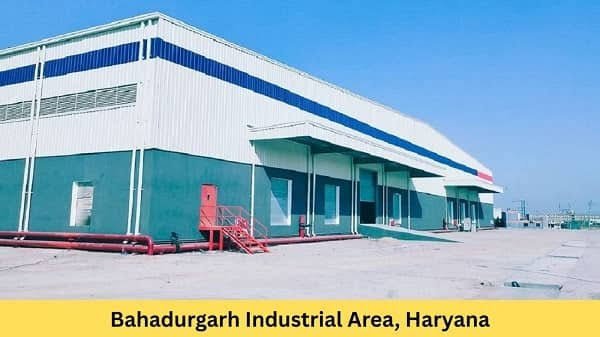
Bahadurgarh Industrial Area is one of Haryana’s important manufacturing centres in the National Capital Region. Located in Jhajjar district beside the Delhi border, its industrial belt includes Modern Industrial Estate sections, HSIIDC Sectors 16 and 17, the specialised Footwear Park and privately developed factory locations around Kassar and Rohad.
Overview
| Particular | Details |
| Location | Bahadurgarh, Jhajjar district, Haryana |
| Common PIN code | 124507; exact code may vary |
| Industrial authority | HSIIDC and other authorities, depending on the property |
| Major industrial sections | MIE, Sectors 16–17, Footwear Park, Kassar and Rohad |
| Main road | NH-9 or Delhi–Rohtak Road |
| Expressway access | Western Peripheral Expressway and UER-II spur |
| Metro line | Delhi Metro Green Line |
| Nearest railway station | Bahadurgarh Railway Station |
| Nearest airport | Indira Gandhi International Airport |
| Major industries | Footwear, ceramics, steel pipes, food products and rubber goods |
| Suitable for | Factories, MSMEs, warehouses and supplier units |
Where Is Bahadurgarh Industrial Area Located?
Bahadurgarh lies on the western edge of Delhi, approximately 21 km from the National Capital Territory. The city is commonly called the “Gateway of Haryana” and forms part of the Delhi NCR industrial economy.
The industrial area is not one enclosed estate. Modern Industrial Estate, HSIIDC Sectors 16 and 17, Footwear Park, Kassar and Rohad are separate locations. Visitors should therefore confirm the sector, plot number, road and factory gate before travelling.
The Footwear Park is a specialised industrial development spread over about 316 acres. Its primary focus is footwear, although supporting activities include plastic moulding, engineering products, auto components and other manufacturing businesses.
Connectivity
1. Road Connectivity
NH-9, historically known as the Delhi–Rohtak highway, is the principal route connecting Bahadurgarh with Mundka, Nangloi and Delhi towards the east and Rohtak and Hisar-facing areas towards the west.
The Western Peripheral Expressway improves access towards Sonipat, Manesar and Palwal without requiring trucks to cross central Delhi. The completed Najafgarh–Bahadurgarh spur of Urban Extension Road-II also strengthens movement between Bahadurgarh, outer Delhi, Dwarka and the airport-facing corridor.
Traffic can become slow around Tikri Border, Sankhol, the main bus-stand area and industrial gates. Businesses expecting regular container movement should inspect the final approach, turning space and roadside parking.
2. Metro Connectivity
Bahadurgarh has direct Delhi Metro access through the Green Line. The most useful stations depend on the industrial section:
- Pandit Shree Ram Sharma: Convenient for Modern Industrial Estate and the Delhi-border side
- Bahadurgarh City: Useful for central industrial and commercial areas
- Brigadier Hoshiar Singh: Serves the western side of the city
Pandit Shree Ram Sharma station was previously known as Modern Industrial Estate station and opened with the Bahadurgarh extension in June 2018.
A further extension towards Asaudha and industrial Sectors 16 and 17 has been studied, but it is not operational. Existing property advertisements should not present this proposed extension as current metro access.
3. Railway Connectivity
Bahadurgarh Railway Station falls under the Northern Railway’s Delhi division and lies on the Delhi–Rohtak corridor. Passenger and suburban services support travel between Delhi, Bahadurgarh and Rohtak.
Autos, buses and company vehicles are generally required for the final journey from the station to Footwear Park, Kassar or the outer HSIIDC sectors.
4. Airport Connectivity
Indira Gandhi International Airport is the nearest major airport. Its usefulness is mainly for executives and high-value consignments, while ordinary industrial goods are usually transported by road or rail. The UER-II corridor offers an additional outer-Delhi route towards the airport side.
Facilities in Bahadurgarh Industrial Area
1. Industrial Plots and Factory Space
Bahadurgarh offers older factory buildings, HSIIDC plots, footwear-production units, warehouses and privately developed manufacturing campuses. Property sizes range from compact MSME sheds to large industrial compounds.
The Footwear Park includes planned roads, power and water supply, security, fire-safety provisions, healthcare support, banking facilities and canteen services. The actual condition and availability should still be inspected for the individual plot.
2. Footwear Manufacturing Ecosystem
Footwear is one of Bahadurgarh’s strongest industrial sectors. The cluster supports shoe manufacturing, soles, rubber sheets, synthetic materials, packaging and related components.
A major factory fire in Sector 17 in May 2026 involved a footwear-component and rubber-products unit and spread to an adjoining fabric and rexine factory. The incident highlights the importance of approved fire exits, hydrants, safe storage and emergency access in factories handling combustible materials.
3. Power, Water and Gas
Industrial power and water systems are available, but sanctioned capacity varies by estate and property. Businesses using moulding machines, furnaces, compressors or refrigeration should check the electricity load, transformer position and backup arrangements.
Ceramic and other gas-dependent industries should also verify supply reliability. Somany Ceramics temporarily halted operations at its Kassar plant in August 2025 after a GAIL pipeline leak disrupted gas supply.
4. Daily-Use Facilities
Banks, fuel stations, restaurants, markets, hospitals and rental accommodation are available throughout Bahadurgarh. Employee transport is commonly provided by larger companies, particularly for factories in Sectors 16–17, Kassar and Rohad.
Major Industries
Bahadurgarh’s manufacturing base includes:
- Footwear, soles and shoe components
- Ceramic tiles and sanitaryware
- Steel and galvanised pipes
- Biscuits and packaged foods
- Rubber, rexine and plastic products
- Auto components and engineering goods
- Warehousing and NCR distribution
Company List in Bahadurgarh Industrial Area
| Company | Main Business |
| Relaxo Footwears | Footwear and related products |
| Parle Products | Biscuits and packaged foods |
| Somany Ceramics | Ceramic tiles and allied products |
| Surya Roshni | Steel pipes and industrial products |
| Swastik Pipe | Steel pipes and tubes |
| Yokohama India | Tyres and rubber products |
| Hindustan National Glass | Glass products |
| Local footwear manufacturers | Shoes, soles, rexine and components |
Parle operates one of its large manufacturing facilities in Bahadurgarh. Surya Roshni’s principal steel plant is also associated with the city, while Somany’s established Kassar facility manufactures ceramic products.
The list is representative. Some companies operate on privately purchased land rather than inside the same HSIIDC estate, so the current factory address should be confirmed before visiting.
Why Businesses Choose Bahadurgarh
Bahadurgarh provides proximity to Delhi without requiring businesses to operate inside the capital’s crowded industrial areas. Its metro, railway and highway connections support both employee movement and regional distribution.
The specialised footwear ecosystem, established manufacturers and access to western and northern India make it attractive for suppliers, packaging companies, engineering workshops and logistics businesses.
Frequently Asked Questions
Q1. Are MIE, Footwear Park and HSIIDC Sectors 16–17 the same estate?
A: No. They are separate industrial sections within the wider Bahadurgarh manufacturing belt. A property’s authority, plot number and access route must be checked individually.
Q2. What should be checked before purchasing an old industrial plot?
A: Verify the allotment or title document, transfer approval, permitted activity, outstanding HSIIDC dues, building sanction, electricity load and whether the production deadline or lease conditions have been followed.
Q3. Can an ordinary footwear unit use adhesives, solvents and rubber-processing machinery?
A: Only with suitable fire protection, ventilation, chemical storage and pollution-control permissions. The approvals required depend on the materials, fuel and production process.
Q4. Is the proposed metro extension to Sectors 16 and 17 already available?
A: No. The existing Green Line ends at Brigadier Hoshiar Singh. Any extension towards Asaudha and the industrial sectors remains proposed or under planning.
Q5. What is the best way to evaluate truck access?
A: Inspect the route during working hours using the same size of vehicle planned for deliveries. Check border congestion, gate width, turning radius, loading space, overhead wires and roadside parking.