 By Saksham Arora
 As traffic begins moving between Patna, Arrah and Buxar, the highway junction at Gidha becomes active with trucks, buses and commercial vehicles. Inside the industrial growth centre, manufacturing plots and factory premises offer businesses an opportunity to operate close to Arrah while remaining connected with western Bihar’s important road corridors.
Gidha Industrial Area, officially promoted as the Gidha Industrial Growth Centre, is located in Bhojpur district of Bihar. Developed under the Bihar Industrial Area Development Authority, it is suitable for food processing, agricultural products, packaging, engineering, construction materials and regional warehousing.
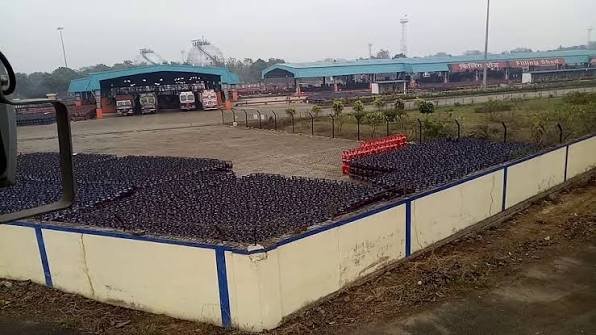
Gidha Industrial Area Overview
| Particular | Details |
| Location | Gidha, Bhojpur district, Bihar |
| Nearby urban centre | Arrah |
| Local administrative area | Koilwar block |
| Industrial authority | Bihar Industrial Area Development Authority |
| Official identity | Gidha Industrial Growth Centre |
| Main highway | NH 922 |
| Important connecting highway | NH 319 |
| Nearest major railway station | Ara Junction |
| Nearby localities | Koilwar, Sakaddi, Kulharia and Arrah |
| Common business potential | Food processing, packaging, engineering and warehousing |
| Best suited for | MSMEs, regional manufacturing and highway distribution |
| Postal code | Confirm from the individual BIADA plot documents |
Gidha is included among the gram panchayats of Koilwar block in Bhojpur district. BIADA is the state agency responsible for developing industrial areas, allocating plots and providing basic industrial infrastructure in Bihar.
Where Is Gidha Industrial Area Located?
Gidha Industrial Area is situated near Arrah in Bhojpur district. It lies close to the junction of NH 922 and NH 319, giving the industrial centre access towards Patna, Buxar, Mohania and the wider Arrah region.
NH 922 is the Patna–Arrah–Buxar road corridor. Its route passes through Bihta, Koilwar, Sakaddi, Gidha, Behea, Dumraon and Buxar. NH 319 begins from the Gidha–Arrah side and continues towards Jagdishpur, Dinara and Mohania.
This highway position is one of Gidha’s strongest advantages. A company can serve Arrah and Patna while also moving goods towards Buxar, Rohtas, Kaimur and eastern Uttar Pradesh.
Visitors should obtain the plot number, factory name and live location before travelling. The industrial growth centre covers multiple plots, and an address mentioning only “Gidha Industrial Area” may not identify the correct factory entrance.
Connectivity
1. Road Connectivity
NH 922 is the main road connection for the industrial area. Eastbound traffic can travel towards Koilwar, Bihta, Danapur and Patna, while westbound movement continues towards Behea, Dumraon and Buxar.
NH 319 provides access from the Gidha junction towards Arrah city, Jagdishpur, Dinara, Kochas and Mohania. It eventually connects with NH 19, creating a route towards major markets in Bihar and Uttar Pradesh.
The Arrah–Chhapra Bridge provides an additional regional connection across the Ganga. It links Bhojpur with Saran district and can support movement between southern and northern Bihar.
Businesses should inspect the exact highway entry, service-road condition and factory approach. A plot may be near the national highway but still require movement through an internal industrial or village road.
2. Railway Connectivity
Ara Junction is the nearest major railway terminal for employees and business visitors. It is located on the Patna–Pandit Deen Dayal Upadhyaya section of the Howrah–Delhi main line and also serves the Ara–Sasaram route.
The station provides passenger connectivity with Patna, Buxar, Varanasi, Delhi, Kolkata and several other major cities. The final journey from Ara Junction to Gidha requires a bus, auto-rickshaw, cab or company vehicle.
The Ara–Sasaram railway line is also undergoing a doubling project intended to improve passenger and freight capacity across Bhojpur and Rohtas. Businesses should treat this as a developing regional advantage rather than an existing private freight connection for every factory.
3. Bus and Employee Transport
Buses and shared vehicles operate along the Patna–Arrah–Buxar highway corridor. Local autos and private vehicles connect Gidha with Arrah, Koilwar and neighbouring villages.
Public transport is easier to find on the national highway than inside the industrial growth centre. Factories operating night shifts may need employee buses or pickup vehicles.
4. Airport Access
Jay Prakash Narayan International Airport in Patna is the practical commercial airport for the region. Road travel generally follows the Koilwar–Bihta–Patna side of NH 922.
Airport-dependent businesses should calculate actual travel time during peak hours because congestion around Koilwar, Bihta, Danapur and Patna can affect schedules.
Facilities in Gidha Industrial Area
1. Industrial Plots and Factory Space
Gidha Industrial Growth Centre contains BIADA industrial plots suitable for developing factories, sheds, offices and storage facilities. Plot size and availability depend on the current BIADA land bank and allotment process.
Commonly suitable activities include:
- Rice, flour and agricultural-product processing
- Packaged food and beverage production
- Cartons, sacks and packaging materials
- Engineering and fabricated components
- Plastic and household products
- Construction and building materials
- Agricultural machinery repair
- Regional warehousing and distribution
The area may be especially useful for businesses using agricultural raw materials from Bhojpur, Buxar and nearby districts.
2. Business Support Services
Arrah provides banks, hospitals, hotels, markets, transport companies and professional services. Koilwar and roadside commercial centres offer fuel stations, restaurants, repair facilities and everyday supplies.
Local fabricators, electricians, labour contractors and transport operators can support smaller industrial units. Businesses requiring specialised machinery maintenance may need suppliers from Patna or larger industrial centres.
3. Electricity, Water and Internal Infrastructure
BIADA’s responsibilities include industrial land development and the provision or coordination of infrastructure such as roads, electricity and water. However, the actual capacity available to each plot must be verified before investment.
A company should inspect:
- Sanctioned electricity load
- Transformer and backup arrangements
- Water source and storage
- Internal-road width
- Stormwater drainage
- Fire-water availability
- Truck loading and parking space
- Boundary and plot measurements
Businesses planning food processing or water-intensive manufacturing should confirm year-round water availability rather than depending only on the general industrial-area description.
Company and Industry Profile
A reliable and continuously updated directory of all operating companies in Gidha Industrial Area is not publicly available. Since plots may be newly allotted, under construction or operated by changing tenants, a category-based profile is more accurate.
| Business Category | Typical Operations |
| Food-processing units | Grains, flour, packaged food and agricultural products |
| Packaging businesses | Cartons, sacks, labels and protective packaging |
| Engineering units | Fabrication, machinery components and repairs |
| Plastic-product businesses | Containers and consumer products |
| Construction-material units | Blocks, fittings and building products |
| Agricultural suppliers | Equipment, storage and farm-related goods |
| Warehouse operators | Inventory storage and regional distribution |
BIADA has continued to allot land and plug-and-play facilities across Bihar for industries including food processing, electronics, plastics, textiles and general manufacturing. Individual Gidha allotments and operating units should be confirmed directly through current BIADA records.
Why Businesses Choose Gidha Industrial Area
Gidha’s main advantage is its highway junction location. Businesses can reach Patna, Arrah, Buxar, Jagdishpur and Mohania without operating inside a crowded city centre.
The presence of BIADA-administered industrial land can provide a clearer industrial framework than purchasing an isolated private plot. The surrounding agricultural economy also creates opportunities for food processing, packaging and rural distribution.
Its limitations include dependence on road-based employee transport, distance from major specialised suppliers and the need to verify utility capacity for each plot.
Frequently Asked Questions
Q1. Is Gidha more suitable for supplying Patna or western Bihar?
A: It can serve both. NH 922 provides movement towards Patna in the east and Buxar in the west, while NH 319 connects the area with Jagdishpur, Rohtas and Kaimur.
Q2. Can factory employees live in Arrah and commute daily?
A: Yes. Arrah offers better housing, hospitals, schools and markets. The company should test shift-hour travel and may need to operate a staff vehicle.
Q3. Is Gidha suitable for an agricultural-products warehouse?
A: Yes. Its position near farming districts and national highways can support grain, packaged-food and agricultural-input storage. The property should have moisture control, pest management and sufficient truck space.
Q4. Can a factory send goods directly by rail from Ara Junction?
A: Not automatically. Ara Junction is primarily useful for passenger connectivity. Freight booking, loading terminals and cargo-handling arrangements must be confirmed separately with Indian Railways or an authorised logistics provider.
Q5. What should an investor verify before applying for a BIADA plot?
A: The investor should check the plot layout, land rate, permitted industry category, utility capacity, construction deadline, lease conditions and present road access. The current BIADA advertisement and allotment documents should be treated as the final authority.