 By Saksham Arora
 Morning in Bagru begins with textile units preparing printed fabric, warehouses loading consignments and delivery vehicles joining the busy Jaipur–Ajmer corridor. Traditional hand-block printing continues beside modern packaging, food-processing, engineering and logistics businesses.
Bagru Industrial Area is a RIICO-developed manufacturing zone near Bagru town in Jaipur district, Rajasthan. The wider industrial belt includes factory plots, workshops, textile-processing units, godowns and privately developed warehouses along the Ajmer Road corridor.
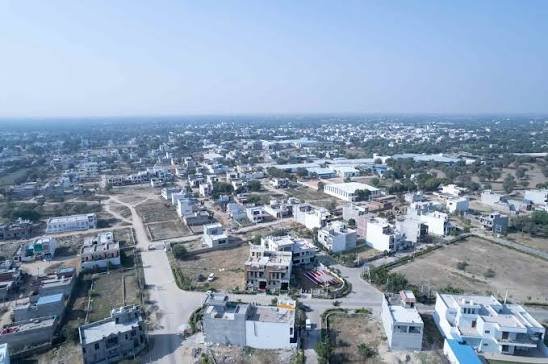
Bagru Industrial Area, Jaipur Overview
| Particular | Details |
| Location | Bagru, Jaipur district, Rajasthan |
| Common PIN code | 303007 |
| Industrial authority | RIICO |
| Area character | Manufacturing, textile and warehousing cluster |
| Main highway | NH-48 or Jaipur–Ajmer Highway |
| Nearby localities | Bhankrota, Mahapura and Ajmer Road |
| Nearest local railway station | Bagru Railway Station |
| Major railway station | Jaipur Junction |
| Direct metro service | Not available |
| Nearest major airport | Jaipur International Airport |
| Major industries | Textiles, printing, packaging, food products and engineering |
| Suitable for | MSMEs, warehouses, factories and distribution businesses |
Where Is Bagru Industrial Area Located?
Bagru Industrial Area is situated close to Bagru town, around 30 kilometres southwest of central Jaipur. The town stands along the Jaipur–Ajmer section of NH-48 and forms part of Jaipur’s rapidly developing western industrial and logistics corridor.
Industrial addresses may mention RIICO Industrial Area Bagru, Bagru Extension, Ajmer Road or a nearby village and survey number. Visitors should obtain the complete plot number, road and factory gate because industrial properties are spread across different pockets.
Bagru is also famous for traditional hand-block and Dabu printing. However, artisan workshops inside the town and factories in the RIICO estate are not always located in the same section.
Connectivity
1. Road Connectivity
NH-48 is Bagru’s strongest transport advantage. It connects the area with Jaipur, Bhankrota and Kishangarh and continues towards Ajmer, Beawar, Udaipur, Ahmedabad and Mumbai-facing routes.
The highway allows manufacturers to serve Jaipur city while maintaining access to western and southern Rajasthan. The Jaipur Ring Road can also help businesses reach other city corridors without taking every vehicle through central Jaipur.
Businesses planning container or heavy-truck movement should inspect:
- Service-road entry
- Legal U-turn points
- Factory-gate width
- Trailer-turning space
- Loading and unloading areas
- Roadside parking
A property may appear directly beside the highway but still have inconvenient access from the opposite carriageway.
2. Railway Connectivity
Bagru has a local railway station on the Jaipur–Ajmer railway corridor. It is useful for selected passenger and local services, but not every long-distance train stops there.
Jaipur Junction is the main railway station for business visitors and long-distance travel. It connects Jaipur with Delhi, Ajmer, Jodhpur, Ahmedabad, Mumbai and many other cities.
Factories generally transport raw materials and finished goods by road. A nearby passenger railway station does not automatically provide industrial freight-loading or private-siding facilities.
3. Metro Connectivity
Bagru does not have an operational Jaipur Metro station.
Mansarovar is one of the practical metro terminals for travellers approaching from Jaipur, followed by a road journey along Ajmer Road. The complete trip still requires a bus, taxi or company vehicle.
No presently approved Jaipur Metro route provides direct service to the Bagru industrial estate, so businesses should not depend on future metro plans when assessing employee transport.
4. Bus and Local Transport
RSRTC buses, private buses and shared vehicles operate between Jaipur, Bagru, Ajmer and neighbouring settlements. Local transport is easier to find along the highway and around Bagru town.
Factories located deeper inside industrial roads may have limited public transport during early-morning or night shifts. Larger employers may need buses or organised pickup points from Bagru, Bhankrota and Jaipur.
5. Airport Connectivity
Jaipur International Airport is the nearest major airport. It is located in the Sanganer area and provides domestic and international passenger services along with air-cargo facilities.
The airport is useful for executives, textile buyers and urgent high-value goods. Ordinary fabric, machinery, packaging and bulk industrial products are generally transported by road.
Facilities in Bagru Industrial Area
1. Industrial Plots and Factory Buildings
The area contains RIICO industrial plots, independent factory buildings, workshops, warehouses and open storage yards.
Businesses taking a resale RIICO property should verify:
- Original allotment documents
- RIICO transfer approval
- Outstanding dues
- Permitted industrial activity
- Approved building plan
- Production or construction conditions
Industrial plots should not be subdivided, transferred or used for another purpose without the required authority approvals.
2. Textile and Printing Ecosystem
Bagru’s strongest identity comes from textiles. The town is internationally known for hand-block printing, natural dyes and Dabu mud-resist printing. The craft is traditionally associated with the local Chhipa artisan community.
The wider textile ecosystem supports:
- Fabric printing
- Dyeing and washing
- Garment production
- Home furnishings
- Fabric finishing
- Labels and packaging
- Textile storage and distribution
Traditional craft units and larger mechanised factories have different water, labour and environmental requirements.
3. Food and Nutraceutical Manufacturing
The RIICO estate also accommodates food, supplement and related manufacturing activities. A 2026 regulatory inspection of a biological-products unit in Bagru highlighted the importance of correct licensing, authorised ingredient sourcing, product testing and proper labelling.
Food-related businesses should confirm clean-water supply, hygiene standards, pest control, storage conditions and valid food licences before beginning production.
4. Electricity and Water
Industrial electricity is available, but the sanctioned load differs from plot to plot. Printing machines, compressors, cold rooms, moulding equipment and automated packaging lines may require an upgraded connection.
Water availability is especially important for dyeing, washing and food processing. A business should verify the daily supply, storage capacity, borewell permission and wastewater-disposal system.
Drainage and Environmental Management
Textile printing and dyeing may generate coloured wastewater, chemicals and sludge. Such waste cannot be released untreated into open drains.
Businesses should confirm whether their process requires:
- Pollution-control consent
- An effluent-treatment plant
- Chemical-storage approval
- Sludge disposal records
- Water-reuse arrangements
A site inspection during the rainy season is useful for identifying waterlogging and blocked drainage.
5. Fire and Worker Safety
Factories storing fabric, paper, plastic, chemicals, cartons or edible ingredients need proper fire-protection systems.
Buildings should have clear exits, safe electrical wiring, suitable extinguishers and access for emergency vehicles. Warehouses should also maintain CCTV, controlled entry and organised storage aisles.
Major Industries
Bagru Industrial Area mainly supports:
- Textile printing and dyeing
- Garments and home furnishings
- Packaging and labels
- Food and nutraceutical products
- Plastic and polymer goods
- Light engineering and fabrication
- Furniture and wood products
- Warehousing and logistics
- Agricultural and consumer-product distribution
Company and Business List
A complete updated public directory of operating companies is not available. The following table represents the main business profile of the estate:
| Company or Business Category | Main Activity |
| Textile-printing units | Printed fabric and garment material |
| Dabu and block-print businesses | Traditional natural-dye textiles |
| Garment manufacturers | Apparel and home furnishings |
| Packaging companies | Cartons, pouches, labels and wrapping |
| Food-product units | Packaged foods and ingredients |
| Nutraceutical manufacturers | Food supplements and wellness products |
| Engineering workshops | Fabrication, machinery and repair |
| Warehouse operators | Storage and Jaipur–Ajmer distribution |
The current operating name, GST details and exact address of an individual company should be confirmed before visiting or applying for employment.
Why Businesses Choose Bagru Industrial Area
Bagru combines RIICO industrial land with direct access to NH-48 and Jaipur’s large consumer market. It is particularly suitable for textiles, packaging, food products, warehouses and businesses supplying western Jaipur.
The traditional printing ecosystem provides skilled workers and a recognised textile identity. The area also offers space for warehouses that may be difficult to operate within central Jaipur.
Its main challenges include the absence of direct metro access, varying internal-road conditions, water requirements for textile processing and strict environmental compliance for dyeing or chemical activities.
Frequently Asked Questions
Q1. Is Bagru Industrial Area the same as Bagru town?
A: No. Bagru town includes residential markets and traditional artisan workshops, while the RIICO industrial estate contains planned factory plots and warehouses.
Q2. Can a RIICO plot be purchased through a normal private agreement?
A: A transfer generally requires verification of RIICO conditions and approval. Outstanding dues, permitted use and the original allotment should be checked first.
Q3. Is Bagru suitable for a textile-dyeing factory?
A: It may be suitable only where sufficient water, pollution approval, wastewater treatment and legal chemical-storage facilities are available.
Q4. Can a warehouse be converted into a food factory?
A: Not automatically. Food production may require higher power, clean-water facilities, drainage, fire approval and food-safety licensing.
Q5. What should be checked before renting a factory?
A: Check approved land use, electricity load, water supply, drainage, fire safety, pollution requirements, building condition and truck access.