 By Saksham Arora
 On Bengaluru’s southern outskirts, the busy city roads gradually open into factory compounds, warehouses and broad industrial plots. Employee buses arrive from Kanakapura and Bengaluru, while trucks move machinery, printed materials, plastic products and engineering components through the estate’s internal roads.
This is Harohalli Industrial Area, a large multi-product manufacturing cluster developed by the Karnataka Industrial Areas Development Board. Spread across several phases, it supports printing, packaging, plastics, food processing, engineering, electrical equipment and other small, medium and large industrial units.
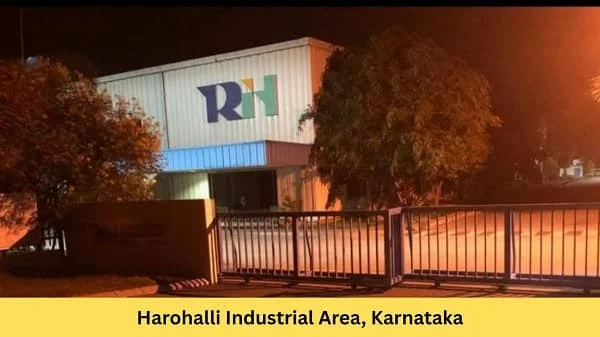
Harohalli Industrial Area Overview
| Particular | Details |
| Location | Harohalli, Bengaluru South district, Karnataka |
| Common PIN code | 562112 |
| Industrial authority | Karnataka Industrial Areas Development Board |
| Main divisions | Phases I, II and III |
| Main approach road | Bengaluru–Kanakapura Road |
| Highway corridor | NH 948 |
| Nearest operational metro | Silk Institute Metro Station |
| Metro line | Namma Metro Green Line |
| Useful railway options | Bidadi and Ramanagara |
| Nearby localities | Kanakapura, Maralavadi, Kaggalahalli and Bidadi |
| Common industries | Printing, packaging, engineering, plastics and food processing |
| Best suited for | Manufacturing, industrial supply and regional warehousing |
Harohalli is now part of Bengaluru South district, formerly known as Ramanagara district. The town is also the administrative headquarters of Harohalli taluk.
Where Is Harohalli Industrial Area Located?
Harohalli Industrial Area is situated near Harohalli town on the Bengaluru–Kanakapura corridor. It lies south of Bengaluru and north of Kanakapura, placing it between the metropolitan market and the wider industrial and agricultural economy of southern Karnataka.
The estate is divided into separate phases rather than operating as one small gated complex. KIADB approved the first-phase layout in 2005 and the second phase in 2008. The combined Phase II and Phase III development was planned as a large multi-product industrial park covering about 904 hectares.
Factories may be several kilometres apart across different internal roads. Visitors should therefore confirm the phase, plot number, company gate and nearest landmark before travelling.
Connectivity
1. Metro Connectivity
Harohalli does not have a metro station within the industrial area. Silk Institute is the nearest practical terminal on the Green Line for many people travelling from Bengaluru.
The Green Line connects Silk Institute with Konanakunte Cross, Banashankari, Majestic, Yeshwanthpur, Peenya and northern Bengaluru. The southern extension between Yelachenahalli and Silk Institute has been operational since January 2021.
The remaining journey from Silk Institute to Harohalli requires a bus, cab, employee vehicle or private transport. Because the distance is considerable, daily workers often find company buses more practical than relying only on metro connectivity.
2. Road Connectivity
The Bengaluru–Kanakapura Road, forming part of NH 948, is the main approach to Harohalli. Northbound traffic can travel towards Kaggalipura, NICE Road and Bengaluru, while southbound traffic continues towards Kanakapura.
Connecting roads also provide access towards Bidadi and the Bengaluru–Mysuru Expressway. This allows businesses to reach Mysuru Road, Ramanagara, Mandya and western Bengaluru without moving all goods through central Bengaluru.
Road conditions inside the estate should be checked carefully. Recent industrial reports have highlighted potholes, waterlogging, weak drainage, truck parking on roads and limited street lighting in parts of Harohalli. These problems may become more serious during heavy rain.
3. Bus and Employee Transport
KSRTC buses operate along the Bengaluru–Kanakapura route and serve Harohalli town. However, public transport from the town to factories situated deep inside the industrial area remains limited.
A 2024 report noted that many employees depended on private vehicles and company transport because direct bus services to factory areas were inadequate. The issue particularly affects night-shift workers and employees travelling from nearby villages.
Companies with large workforces commonly operate buses from Bengaluru, Kanakapura, Ramanagara, Bidadi and nearby settlements.
4. Railway and Airport Access
Bidadi and Ramanagara are useful railway stations for the wider region, but both require onward road travel to Harohalli. Bengaluru City Railway Station offers broader long-distance connectivity but is much farther away.
Kempegowda International Airport is located on the opposite side of the Bengaluru metropolitan region. Harohalli is therefore better suited to road-based industrial distribution than to businesses requiring frequent airport access.
Facilities in Harohalli Industrial Area
1. Industrial Plots and Factory Space
Harohalli offers developed industrial plots, independent factories, production sheds, workshops and warehouses of different sizes. The estate supports MSMEs as well as larger manufacturing businesses.
Common industrial activities include:
- Printing and commercial packaging
- Plastic products and moulded components
- Engineering and metal fabrication
- Electrical and electronic equipment
- Food and agro-based processing
- Furniture and building materials
- Machinery assembly and maintenance
- Warehousing and regional distribution
Phase I is associated with the Printech Park Cluster, which reflects the area’s importance for printing and related businesses. Industrial development has continued into later phases, although plot possession and title processes can differ between individual allotments.
2. Business Support Services
The surrounding industrial ecosystem includes transporters, fabricators, electricians, machinery-repair businesses, labour contractors and packaging suppliers.
Harohalli town provides banks, fuel stations, restaurants, pharmacies and everyday shops. More extensive hospitals, hotels and commercial services are available towards Kanakapura, Bidadi and Bengaluru.
Companies employing workers from distant locations may need their own canteen, medical support and staff transport because the industrial estate is spread over a large area.
3. Power, Water and Drainage
Industrial plots generally have access to power networks and basic estate infrastructure, but availability differs by phase and property. Businesses should verify the sanctioned electrical load, transformer capacity, internal road condition and backup-power requirement.
Water availability deserves special attention. Industrial associations reported in 2026 that many Harohalli units depended on borewells because reliable KIADB water supply was limited. Groundwater permissions, tanker cost and the amount of water needed for production should be checked before choosing a property.
Drainage and waterlogging have also been reported in some parts of the estate. A factory should therefore inspect the plot during or immediately after rain whenever possible.
Company and Business Profile in Harohalli Industrial Area
Harohalli contains hundreds of small, medium and large units, but there is no single continuously updated public company directory. The following profile represents its major business groups:
| Company or Business Group | Main Activity |
| Printech Park Cluster | Printing and allied production |
| Plastic-product manufacturers | Moulded and industrial plastic goods |
| Engineering companies | Fabrication, machinery and components |
| Packaging businesses | Printed cartons, labels and packing materials |
| Food-processing units | Packaged and agro-based products |
| Electrical manufacturers | Panels, equipment and components |
| Warehouse operators | Industrial storage and distribution |
Company names and tenants may change, especially in rented factories. Visitors should confirm the present company name, phase and plot number directly before travelling.
Why Businesses Choose Harohalli
Harohalli gives manufacturers access to Bengaluru without the high density and property pressure found in older city industrial areas. Its large plots are useful for factories that need production buildings, storage yards and future expansion space.
The Kanakapura Road corridor also supports movement towards Bengaluru, Kanakapura, Ramanagara and Mysuru Road. The area suits printing, packaging, engineering, plastics and other businesses that depend mainly on road transport.
Its main limitations are the distance from the metro, uneven public transport, water dependence and infrastructure problems in certain stretches. Property selection should therefore be based on the exact phase and plot rather than the general name of the estate.
Frequently Asked Questions
Q1. Which Harohalli phase is best for a new business?
A: There is no single best phase. The choice depends on plot size, factory condition, road access, water arrangements and distance from the main highway.
Q2. Can employees commute daily from Bengaluru?
A: Yes, but the journey can be long. Company buses from Silk Institute, Banashankari or other southern Bengaluru locations are generally more convenient.
Q3. Is Harohalli suitable for printing and packaging businesses?
A: Yes. The estate has an established printing and packaging base, including the Printech Park Cluster in Phase I.
Q4. Is worker accommodation available near the industrial area?
A: Rooms and rental housing are available around Harohalli town and nearby villages. Senior staff may prefer living closer to Kanakapura, Bidadi or southern Bengaluru.
Q5. What should be checked before purchasing a KIADB plot?
A: The buyer should verify the allotment letter, lease conditions, possession certificate, sale-deed status, outstanding dues and permitted industrial use. Delays and disputes over sale deeds have been reported in some Harohalli allotments.